

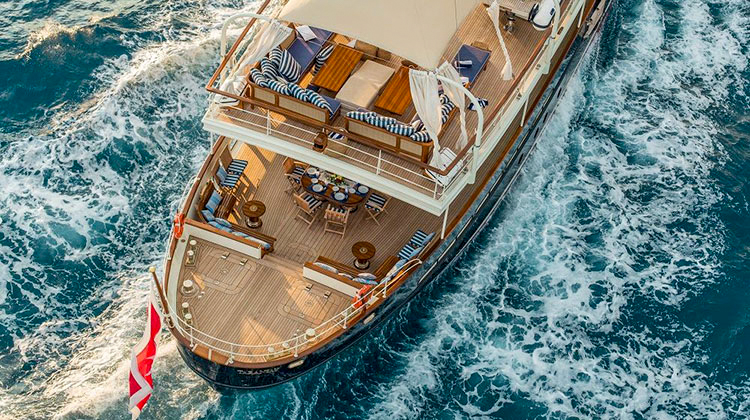
On board, choosing a material is never only about how it looks. It is about understanding how it will be used, exposed and lived with over time.
Before looking, Valentina D’Urso touches.
The wood of a table. The texture of a fabric. The finish of a surface.
It is instinctive. After years of working on yachts, she has learnt that a material tells you as much through touch as it does through appearance.
Because on board, materials are never simply decorative.
They are touched, washed, exposed to light, moved, used repeatedly and, in some areas, brought into constant contact with water and salt.
The real question is not whether a material is beautiful enough for a yacht.
It is whether it is right for the way that part of the yacht will actually be used.
Inside a modern large yacht, the answer is often quite simple. Temperature and humidity are carefully controlled, and material choices are far less restrictive than they once were. In many cases, the same level of freedom found in a private residence is now possible on board.
Outside, the requirements change.
Sun, salt water, frequent washing and intensive use all affect the way a textile behaves. Colour resistance, durability and technical treatments become much more important.
This is where experience makes the difference.
A chief stewardess may know exactly the colour, weight or feel she is looking for. But understanding how a particular textile will react after weeks in the sun, repeated washing or constant exposure is another matter.
The role of the specialist is to know what will work, what may not, and where a technical choice is worth making.
Fortunately, technical performance no longer means compromising on appearance.
The range of fabrics developed for marine use has evolved considerably. Outdoor textiles can now feel softer, look more refined and sit naturally within an elegant interior or exterior scheme.
For Valentina, this balance between beauty and use is essential.
She often says that one of the best compliments she can receive is hearing that someone can come back from the sea and sit on a sofa in wet clothes without worrying about leaving a mark.
That is what feeling at home on board means to her.
Not making a yacht feel like a house.
Creating an environment that is beautiful, but also easy to live in.
Because the right materials should not make life on board more complicated.
They should make it feel natural.
“The real question is not whether a material is beautiful enough for a yacht. It is whether it is right for the way it will actually be used.”